
1. Jemaa el-Fnaa: The Heart of Marrakech
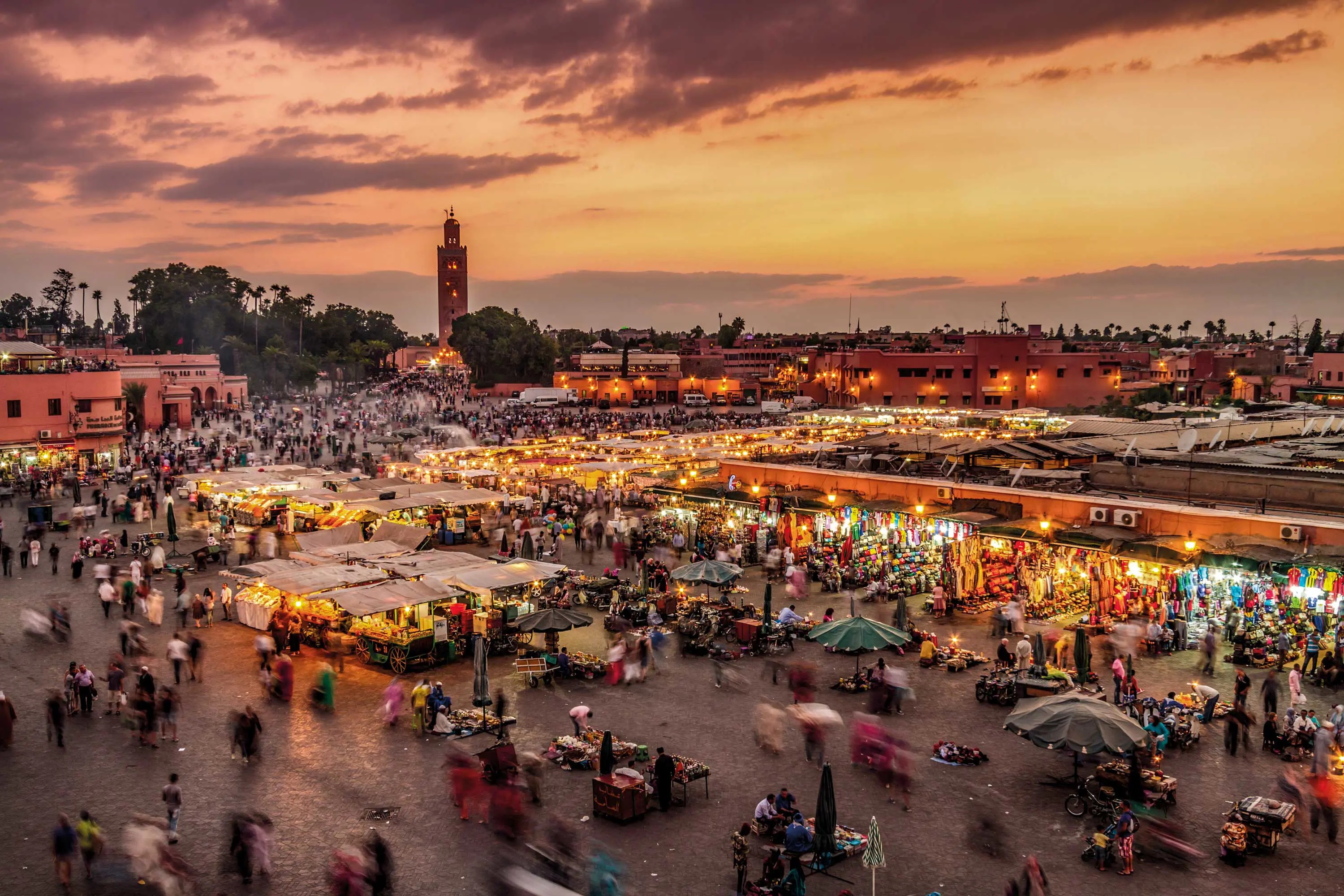
No visit to Marrakech is complete without spending time in Jemaa el-Fnaa, the vast central square that has been the beating heart of the city for nearly a thousand years. Listed as a UNESCO Masterpiece of the Oral and Intangible Heritage of Humanity, this is where Marrakech truly comes alive.
During the day, the square buzzes with orange juice vendors (freshly squeezed for around 5-10 MAD), snake charmers, henna artists, and herbalists. But the real magic happens after sunset when the square transforms into a massive open-air food market. Dozens of stalls fire up their grills, serving everything from lamb tagine and harira soup to snail broth and sheep heads. Pull up a bench, point at what looks good, and enjoy a meal for as little as 30-50 MAD.
For the best view, grab a rooftop table at one of the cafes lining the square. Cafe de France and Le Grand Balcon du Cafe Glacier both offer panoramic views, though you will pay tourist prices for the privilege. Arrive around 5pm to secure a good spot before the evening rush.
2. Koutoubia Mosque and Its Minaret
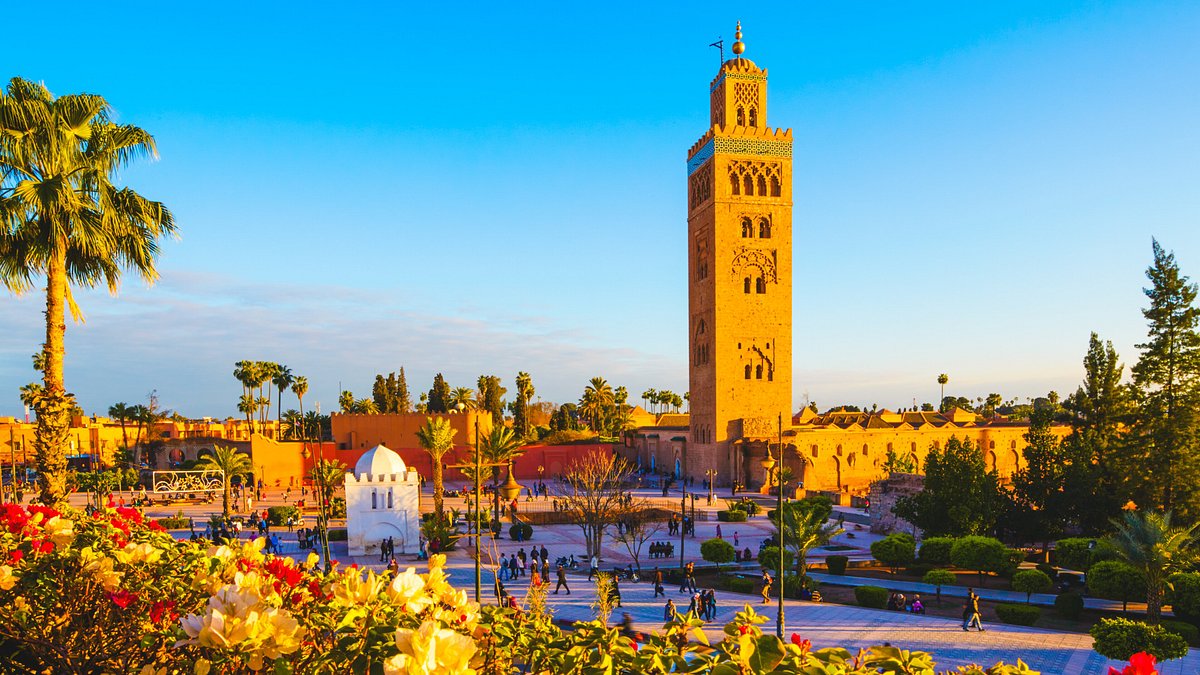
The Koutoubia Mosque is the largest mosque in Marrakech and its 77-metre minaret is the tallest structure in the city. Built in the 12th century under the Almohad dynasty, its minaret served as the architectural inspiration for both the Giralda in Seville and the Hassan Tower in Rabat.
Non-Muslims cannot enter the mosque, but the exterior and surrounding gardens are beautiful and well worth a visit. The gardens are particularly lovely in the late afternoon when the setting sun turns the minaret a warm shade of gold. The mosque is just a five-minute walk west of Jemaa el-Fnaa, so you can easily combine the two.
3. Bahia Palace
The Bahia Palace is one of the finest examples of Moroccan architecture you will find anywhere. Built in the late 19th century for Si Moussa, the grand vizier, it was designed to be the greatest palace of its time. The name "Bahia" means "brilliance," and it lives up to it.
Wander through 8,000 square metres of intricately decorated rooms featuring carved cedarwood ceilings, zellige tilework in geometric patterns, and stucco walls with Arabic calligraphy. The central courtyard with its marble fountain and surrounding orange trees is a highlight. The palace also has an expansive Andalusian garden with fragrant jasmine and bougainvillea.
Entry costs 70 MAD and the palace is open daily from 9am to 5pm. Visit early in the morning to avoid the crowds, especially during peak tourist season from October to April.
4. Majorelle Garden
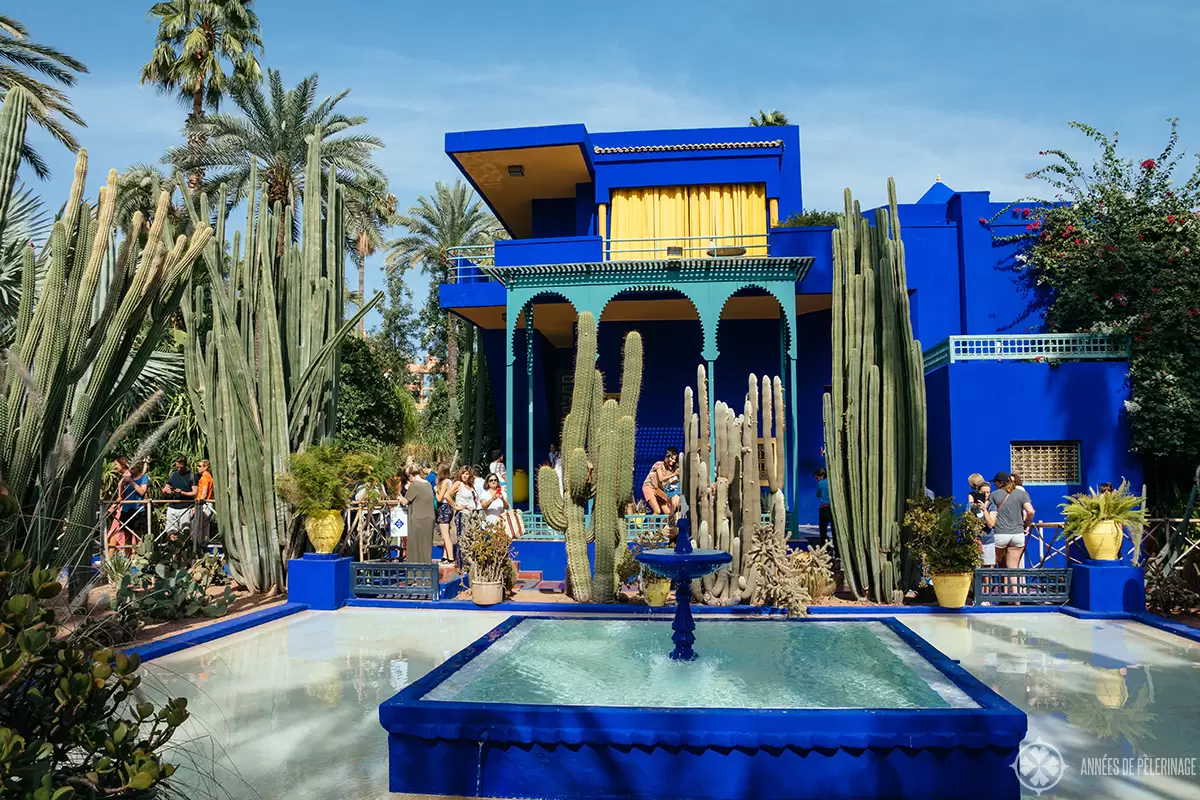
Majorelle Garden is a two-and-a-half-acre botanical garden that feels like stepping into another world. Created in the 1920s by French painter Jacques Majorelle, the garden was later purchased and restored by fashion designer Yves Saint Laurent and Pierre Berge in 1980.
The garden is famous for its cobalt blue buildings (known as Majorelle Blue), towering bamboo groves, giant cacti, lotus ponds, and bougainvillea. It is home to over 300 plant species from five continents. Inside the blue studio building, you will find the Berber Museum, which houses an impressive collection of Amazigh artifacts, textiles, and jewellery.
Tickets cost 150 MAD for the garden and an extra 30 MAD for the museum. The garden gets extremely crowded by mid-morning, so aim to arrive right at opening time (8am). It is located in the Gueliz neighbourhood, about a 20-minute walk from the medina.
5. The Souks of Marrakech
The souks (markets) of Marrakech are among the largest traditional markets in all of Morocco. Stretching north from Jemaa el-Fnaa, they form a labyrinth of narrow, covered alleyways where you can find virtually anything: leather goods, brass lanterns, hand-woven carpets, argan oil, spices, ceramics, and traditional Moroccan clothing.
Each section of the souk traditionally specialises in a particular craft. The Souk Semmarine is the main artery and sells a bit of everything. Souk des Teinturiers (Dyers' Souk) is where you can see freshly dyed fabrics hanging overhead. Souk Haddadine is the blacksmiths' quarter, filled with the sound of hammering metal.
Bargaining is expected and part of the experience. A good rule of thumb is to start at about half the asking price and work from there. Be friendly, take your time, and don't be afraid to walk away. Prices tend to be lower in the deeper, less tourist-frequented parts of the souk.
6. Saadian Tombs
The Saadian Tombs date back to the 16th century and contain the remains of members of the Saadian dynasty, including Sultan Ahmad al-Mansur. They were sealed off and forgotten for centuries until being rediscovered by a French aerial survey in 1917.
The tombs are remarkable for their elaborate decoration. The Hall of Twelve Columns is the most impressive chamber, featuring Italian Carrara marble columns, intricate muqarnas (honeycomb) ceilings, and zellige mosaic tilework. Despite the small size of the site, the craftsmanship is outstanding.
Entry is 70 MAD. The site is small and gets crowded quickly, so try to visit either first thing in the morning or in the late afternoon. It is located near the Kasbah Mosque in the southern part of the medina.
7. Menara Gardens
The Menara Gardens offer a peaceful escape from the intensity of the medina. Located just west of the city walls, these gardens were established in the 12th century by the Almohad dynasty and cover around 100 hectares of olive groves surrounding a large central basin.
The gardens are famous for their iconic green-tiled pavilion reflected in the still water of the basin, with the snow-capped Atlas Mountains visible in the background on clear days. This is one of the most photographed spots in all of Marrakech. The pavilion was built in the 16th century and restored in the 19th century.
Entry to the gardens is free (there is a small charge to enter the pavilion). It is a lovely spot for a late afternoon stroll, and the olive groves provide welcome shade during hot days. The gardens are about a 30-minute walk from Jemaa el-Fnaa or a quick taxi ride.
8. Madrasa Ben Youssef
The Ben Youssef Madrasa was once the largest Islamic college in all of North Africa. Founded in the 14th century and rebuilt in the 16th century under the Saadian dynasty, it housed up to 900 students who came from across the Maghreb to study theology, law, and science.
The architecture is stunning. The central courtyard features a large marble basin surrounded by intricately carved stucco walls, cedarwood latticework, and zellige mosaics. Look up and you will see carved muqarnas ceilings in the prayer hall that took artisans years to complete. The student dormitory cells, while tiny and sparse, provide an interesting contrast to the ornate public spaces.
Entry costs 50 MAD and it is open daily. The madrasa is located in the northern medina, about a 15-minute walk from Jemaa el-Fnaa through the souks.
9. Food Experiences in Marrakech
Marrakech is a food lover's paradise. Beyond the street food stalls of Jemaa el-Fnaa, the city offers some incredible culinary experiences. Tagine, the slow-cooked stew named after the conical clay pot it is cooked in, is the quintessential Moroccan dish. Try lamb tagine with prunes and almonds, or chicken tagine with preserved lemons and olives.
Couscous is traditionally served on Fridays, the holy day. Many local restaurants offer special Friday couscous that is worth seeking out. Pastilla (also spelled bastilla) is a unique sweet-and-savoury pie, traditionally made with pigeon, almonds, cinnamon, and phyllo pastry. Tanjia is a dish specific to Marrakech: slow-cooked meat in a clay urn that is placed in the ashes of a hammam furnace for hours.
For a more immersive experience, book a cooking class. Several riads and cooking schools in the medina offer half-day classes where you visit the market to buy ingredients and then learn to prepare a traditional Moroccan meal. Classes typically cost 300-500 MAD per person and include the meal.
For fine dining, try Nomad for modern Moroccan cuisine overlooking the spice souk, or Le Jardin for a peaceful garden setting. For budget eats, the hole-in-the-wall restaurants on Rue Bani Marine near the Ben Youssef Madrasa serve some of the best-value meals in the medina.
Getting to Marrakech from Agadir
Staying in Agadir and want to explore Marrakech? We offer comfortable private transfers with English-speaking drivers, door-to-door service, and fixed prices. Choose a full-day excursion with time to explore, or a simple airport transfer.
Practical Tips for Visiting Marrakech
Marrakech is a year-round destination, but the most pleasant months are October to April when temperatures are warm but not unbearable. July and August can see temperatures exceeding 45 degrees Celsius.
If you are staying in Agadir, Marrakech makes an excellent day trip. The journey takes around 3 hours by road through the scenic High Atlas foothills. You can book a private transfer from Agadir to Marrakech with TransferMorocco for a stress-free experience. Your driver will pick you up from your hotel, drive you to Marrakech, wait while you explore, and bring you back in the evening.
For those flying into Marrakech Menara Airport, we also offer private airport transfers between Agadir and Marrakech in comfortable, air-conditioned vehicles.
Plan Your Morocco Trip
Read our other travel guides to help plan your Moroccan adventure.