Currency and Money
The currency of Morocco is the Moroccan Dirham (MAD). As of early 2026, 1 EUR is roughly 10.5-11 MAD, and 1 USD is roughly 10 MAD. The dirham is a closed currency, meaning you cannot easily buy it before arriving in Morocco. Exchange money at the airport on arrival, at banks, or at licensed exchange offices (bureaux de change) in the city.
ATMs are widely available in all cities and most towns. They accept Visa, Mastercard, and most international debit cards. Withdrawals are typically in 100 or 200 MAD denominations. Be aware that some ATMs charge a local fee of 20-30 MAD per withdrawal, and your home bank may also charge a foreign transaction fee.
Morocco is still largely a cash economy. While credit cards are accepted at large hotels, upscale restaurants, and some tourist shops, you will need cash for markets, small restaurants, taxis, tips, and most everyday purchases. Always carry a mix of small notes (20 and 50 MAD) and larger notes (100 and 200 MAD). Getting change for a 200 MAD note at a small shop can be difficult.
Euros are sometimes accepted in tourist areas, but the exchange rate you get will not be favourable. Use dirhams wherever possible for the best value.
Tipping in Morocco
Tipping is customary in Morocco and an important part of the service economy. Here are rough guidelines. In restaurants, 10 percent of the bill is standard if service is not included (check your bill). For cafe waiters serving tea or coffee, rounding up or leaving 2-5 MAD is appreciated.
For hotel porters, 10-20 MAD per bag is typical. Riad staff who go above and beyond deserve a tip at checkout, around 50-100 MAD depending on the length of your stay. For taxi drivers, rounding up to the nearest 5 or 10 MAD is common but not obligatory.
If someone offers to help you find your riad in the medina or gives you directions, they will usually expect a small tip of 10-20 MAD. This is normal and accepted. For guided tours, 50-100 MAD per person is appropriate for a half-day tour.
Language
Morocco's official languages are Arabic (Darija, the Moroccan dialect) and Amazigh (Berber). French is widely spoken as a second language and is the primary language of business, higher education, and government. In tourist areas, many people also speak English, Spanish (especially in the north and in Agadir), and German.
In Marrakech, Agadir, and Casablanca, you can generally get by with English in hotels, tourist restaurants, and shops. However, learning a few words of Arabic or French will be appreciated. Useful phrases include: "Salam" (hello), "Shukran" (thank you), "La, shukran" (no, thank you), "Bslama" (goodbye), and "Beshhal?" (how much?).
Safety
Morocco is generally a safe country for tourists. Violent crime against visitors is rare, and the country has a strong police and security presence, especially in tourist areas. That said, petty crime exists like anywhere, so use common sense.
In the medinas, be aware of pickpockets, especially in crowded areas like Jemaa el-Fnaa. Keep your phone and wallet in a front pocket or a cross-body bag. Be cautious of people who aggressively offer unsolicited help or want to "show you something" as this often leads to a request for money.
Scams targeting tourists do exist. Common ones include inflated taxi fares (always agree on a price before getting in, or insist on the meter), fake guides, and the henna scam (someone grabs your hand and applies henna before demanding payment). Stay polite but firm, and don't be afraid to say "La, shukran" and walk away.
Solo female travellers may receive more attention than they are used to, particularly verbal comments in busy areas. This is almost always harmless, but it can be tiring. Walking with purpose, wearing sunglasses, and ignoring unwanted attention is the most effective strategy.
What to Wear
Morocco is a Muslim country, and while it is relatively liberal compared to some, modest dress is appreciated, especially outside tourist beach resorts. For women, covering shoulders and knees is a good guideline in cities and medinas. Loose-fitting trousers or long skirts, and tops that cover the shoulders, will help you blend in and reduce unwanted attention.
At the beach in Agadir, bikinis and swimwear are perfectly normal. Agadir is a resort city and very accustomed to international tourists. However, once you leave the beach area, cover up. Walking through the city in beachwear will attract stares.
For men, shorts and t-shirts are fine in most places. Long trousers are more appropriate for mosque areas and traditional neighbourhoods. Comfortable walking shoes are essential, especially for the cobblestoned medina streets.
Bargaining
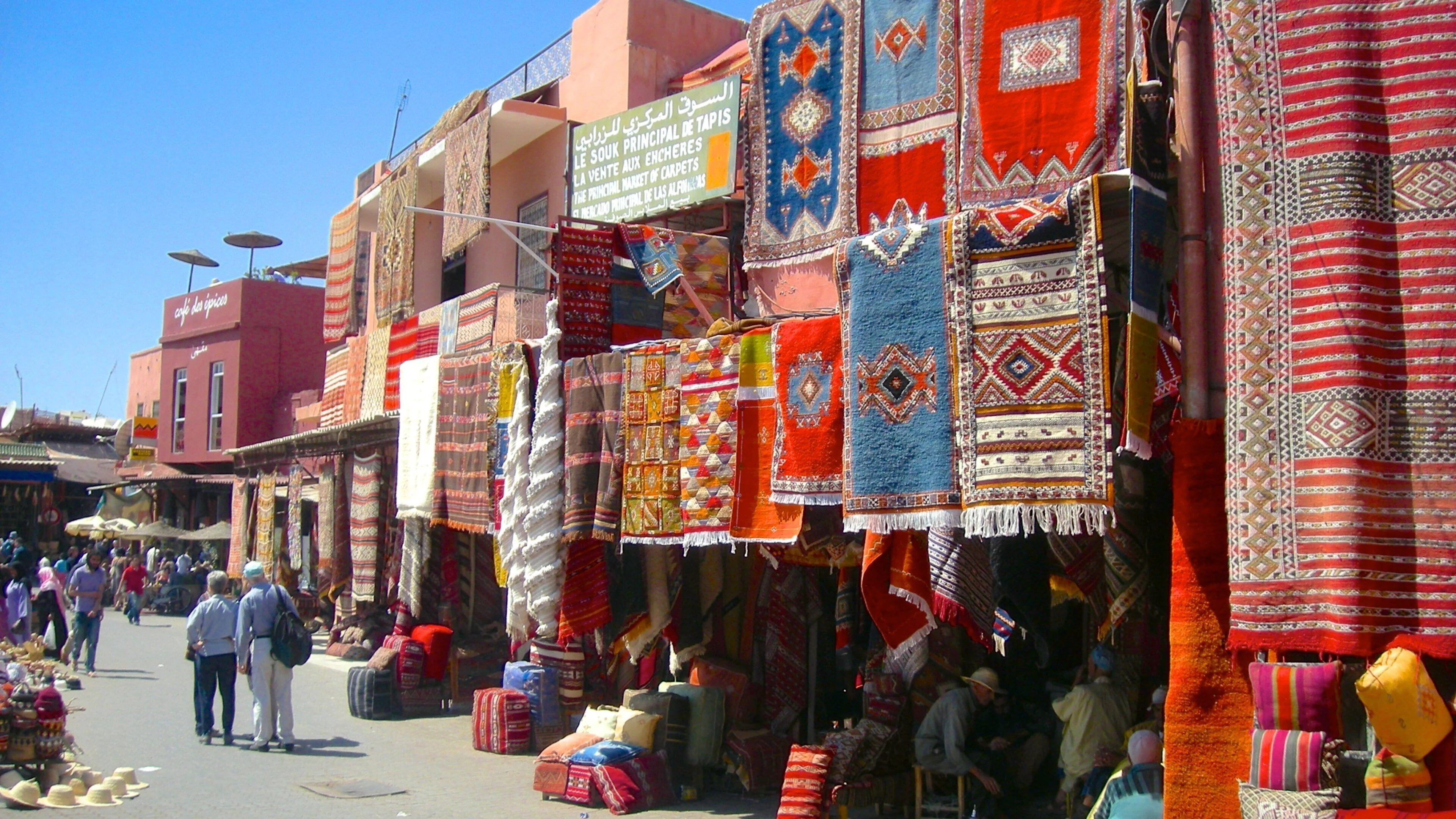
Bargaining is a way of life in Moroccan markets. Prices in souks are not fixed, and the initial asking price is typically two to four times what the seller expects to receive. This is not dishonesty; it is the system.
Start by expressing interest, then ask the price. Counter at about 40-50 percent of the asking price and work from there. Stay friendly and good-humoured throughout. If you cannot agree on a price, walk away. The seller will often call you back with a lower offer. If not, there is probably another stall selling something similar nearby.
A few things to note: do not bargain in established shops with marked prices, supermarkets, or restaurants. Do not bargain for food at market stalls. And do not start bargaining for something you have no intention of buying, as this is considered rude.
Best Time to Visit Morocco
Morocco has a diverse climate, so the best time to visit depends on where you are going. For Marrakech and inland cities, the best months are March to May and September to November. These shoulder seasons offer warm, pleasant weather without the extreme heat of summer (when Marrakech regularly exceeds 40 degrees Celsius).
Agadir has a mild coastal climate and is pleasant year-round. The warmest months for swimming are July to October, while December to February offers mild, sunny days perfect for sightseeing. Agadir is often called the city of eternal sunshine, and it lives up to the name.
Ramadan affects travel in Morocco. During this month, many restaurants close during the day, and the general pace of life slows down. Tourist restaurants and hotels continue to serve food, but the experience is different. Ramadan can also be a special time to visit, with festive evenings and the chance to experience iftar (the evening meal that breaks the fast).
SIM Cards and Internet
Getting a local SIM card in Morocco is cheap and easy. The three main operators are Maroc Telecom (the largest and best coverage), Orange, and Inwi. You can buy a prepaid SIM at the airport on arrival, at phone shops, or at corner stores throughout the country.
A SIM card with 20 GB of data costs around 50-100 MAD and lasts 30 days. You will need your passport to register the SIM. Data speeds are generally good in cities and along major highways, with 4G coverage in most populated areas. In rural and mountain areas, coverage can be spotty.
Most hotels, riads, and cafes offer free WiFi, though speeds vary. Having mobile data as backup is highly recommended, especially for navigation. Google Maps works well in Morocco and is invaluable for finding your way through the medina.
Getting Around Morocco
Morocco has a decent transport network, but connections between some cities can be slow or inconvenient. Here is a quick overview of your options.
Trains (ONCF) connect Marrakech, Casablanca, Rabat, Fez, Meknes, and Tangier. Trains are comfortable, reliable, and affordable. First class is recommended and still cheap. However, the rail network does not extend to Agadir, Essaouira, or most southern cities.
Buses (CTM and Supratours) cover routes the trains do not, including Agadir. They are cheap but slower and less comfortable. Read our detailed guide to getting from Agadir to Marrakech for a full comparison of transport options.
For intercity travel between Agadir and Marrakech, or from Casablanca to Marrakech, a private transfer is the most comfortable option, especially for groups. At TransferMorocco, we offer private transfers from Agadir to Marrakech, airport transfers between Agadir and Marrakech, and transfers from Casablanca to Marrakech.
Book a Private Transfer in Morocco
Skip the hassle of buses and shared taxis. Our private transfers offer door-to-door service with fixed prices, comfortable vehicles, and English-speaking drivers.
View All Transfer RoutesFood and Drink
Moroccan cuisine is one of the world's great culinary traditions. Tagine (slow-cooked stew), couscous, pastilla (sweet-savoury pie), and harira (tomato and lentil soup) are national dishes you must try. Street food is excellent and cheap: try msemen (flatbread), sfenj (doughnuts), and bocadillos (stuffed baguettes).
Mint tea is the national drink and is served everywhere, often very sweet. Moroccan coffee is typically espresso-based and strong. Fresh orange juice is available on almost every corner for 5-10 MAD.
Tap water is not safe to drink. Stick to bottled water, which is cheap and available everywhere (3-5 MAD for a 1.5 litre bottle). Alcohol is available in licensed bars, hotel restaurants, and some tourist restaurants, but it is not served in traditional Moroccan eateries. Supermarkets like Carrefour and Marjane sell beer, wine, and spirits.
Health and Hygiene
No special vaccinations are required for Morocco, though it is worth ensuring your routine vaccinations are up to date. Traveller's diarrhoea is common, so bring medication just in case. Stick to bottled water, avoid salads and raw vegetables at street stalls, and peel fruit yourself.
Pharmacies are plentiful in Moroccan cities and are identified by a green cross sign. Pharmacists are knowledgeable and can provide advice and sell many medications over the counter that would require a prescription in Europe. For serious medical issues, Marrakech and Casablanca have modern private clinics.
Sun protection is essential, especially in summer. The Moroccan sun is strong, even on cloudy days. Wear sunscreen (SPF 30+), a hat, and sunglasses. Stay hydrated, particularly if you are walking around medinas in the heat.
More Travel Guides
Dive deeper into Morocco trip planning with our other guides.